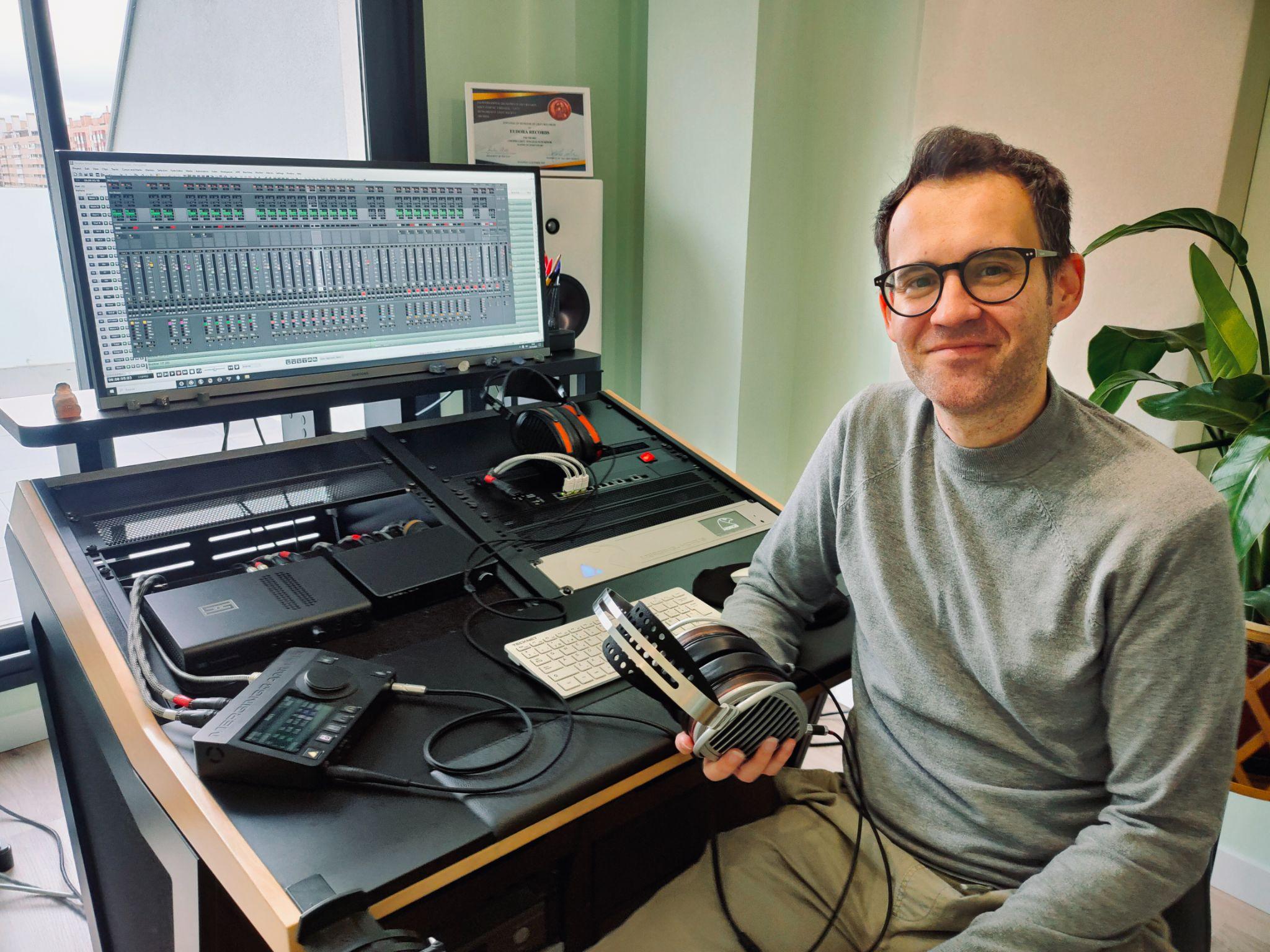
Could you describe what you do as an audio engineer in words that are understandable to an audiophile? I also run my own Classical music label (Eudora Records), for which I do all the recordings myself, so in those cases, I actually not only take care of the recording side of each album, but also all the steps needed to have the album available worldwide. When it comes to recording Classical music, in contrast to pop or rock music, acoustics and microphone choice and placement of the main pair of microphones represent at least 98% of the final result sonically, so that means that those three aspects are paramount. You will never obtain a great-sounding album by recording in mediocre acoustics, not even the best engineer would be able to do that. So that's where it all should start: choosing the right acoustic space.
Whenever I can, I choose omnidirectional microphones for the main pair, as in my opinion, they simply have the best tonal response by far. Getting the main pair right on location is essential; trusting in placing lots of microphones so things can be fixed later rarely works. That doesn't mean that a recording has to be done with just two microphones, but even if you use dozens of them, the main pair has to be as perfect as possible.
Before I even place the microphones, I conceive in my mind the sound I want to hear, considering that specific recording space and the given music and musicians. You have to rapidly choose from your available microphones and recording techniques those that will get you that sound, so you really need to know your microphones and those techniques! Then you have to find the right spot where the relationship between the direct sound and the space sound is optimal.
That’s just getting the sound right, so to say, then comes the work as a producer during the sessions, which basically involves making sure that everything needed for the upcoming editing has been covered and recorded, so that an ideal edited version can be prepared afterwards.
Were you an audiophile before you became an audio professional? What led to this career choice? I have to say that I was (and am) first a musician myself, I’m a Classical guitarist, I was trained in Madrid and in Salzburg. Since the very beginning, I had a strong attraction for the recording world and especially for the listening process and the equipment used to convey the emotions. I can say that I was an audiophile in spirit from the very beginning of my musical life! I strongly remember the time I bought my first pair of decent headphones and listened to Beethoven's Fifth Symphony, the connection with headphones has remained intact since then.
Do you still enjoy listening to music for leisure these days? Absolutely, I love listening to music! And I love checking what my colleagues are doing, and listening to the different recording concepts and philosophies. And I’m still deeply moved by the great Classical works, they’re a part of my daily life as they were 20 years ago!
What are some of your favorite works that inspired you when you were an aspiring audio engineer? I would probably say that everything the great engineer and producer Nicolas Bartholomée had been doing back then, I can safely say that his concept of the recorded sound undoubtedly shaped my own ideal.
What are some of your own works that you’re most proud of? I have been very fortunate to work with some of the best musicians here, in Spain, and also extremely blessed to be able to record in some outstanding acoustics, like the big hall in Zaragoza, one of the best acoustics worldwide. I also feel a deep connection with the piano and its repertoire, so I’m naturally inclined to choose some of the piano recordings I’ve done there, like Josep Colom’s Mozart sonatas and Mompou’s ‘Música callada’ respective albums, or Javier Laso’s Schubert and Schumann album.
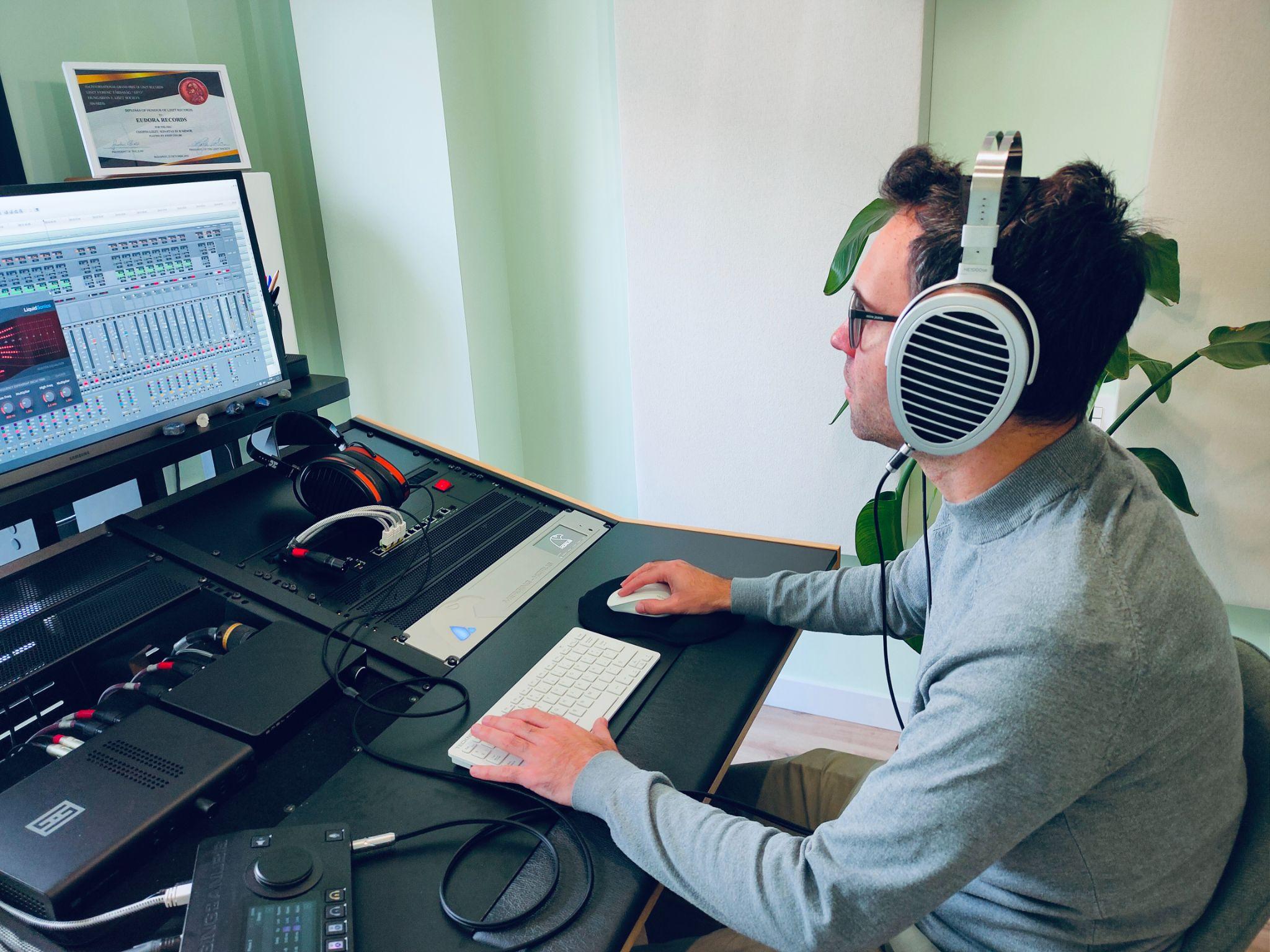
All audio professionals use headphones at one point or another in their workflow. How do you use headphones? I feel a deep connection with headphones, as I honestly think that for Classical music, good headphones offer something that the best speakers cannot do. Headphones have been an essential part of my workflow: from the recording sessions (they’re completely essential for recording on location) to the final check when the albums are ready, through the editing process. They’re also my personal companion when I want to enjoy music.
Has Hifiman headphones informed your production decisions or the way you listen/mix/master? Absolutely, when it comes to Classical music, I think Hifiman headphones deliver something unique texturally speaking, that is hard to put into words, but that I can clearly hear in all models I’ve tried (He1000se, He1000 Stealth, Arya Organic), and that it matches very naturally the reality of the recorded instruments. There’s a refinement in the transducers used in Hifiman’s headphones, from the Sundara to the most expensive models, that in my opinion, is always very close to reality. Plus, they deliver a level of technicality that is very difficult to find in speakers, even spending a lot of money.
What are some of the exciting upcoming works you would like to share with us? With my label, Eudora Records, I keep championing the DSD format in its highest resolution available, DSD256 (11.MHz), and I’ll be releasing soon a wonderful four-hands piano album with Josep Colom and Javier Laso and a beautiful album with first recordings of arias from the Farinelli time, with mezzosoprano Lucía Caihuela and the ensemble La Madrileña. As a freelance engineer, I’m collaborating with the Orquesta de Castilla y León for several recordings for the British label Signum Records.
 ← Back to Artists